Quentin Font: Mastering Smooth Hand-Brushed Typography
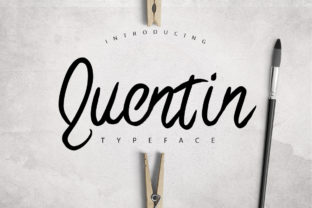
There is a distinct moment in the design process when a project shifts from feeling mechanical to feeling alive. Often, this transformation hinges on a single typographic choice. Quentin represents that pivot point for many creators. As a smooth hand-brushed font, it carries the warmth of human touch while maintaining the structural integrity required for professional communication. The defining characteristic of Quentin is how its letters match perfectly with each other, creating a seamless flow that mimics natural handwriting without the inconsistency of actual pen-on-paper variability.
For designers, marketers, and small business owners, finding a typeface that balances personality with legibility can be a challenge. Many script fonts sacrifice readability for style, or vice versa. Quentin bridges this gap. It offers the organic aesthetic of a brush stroke but delivers the reliability of a digital asset. This makes it an invaluable tool for anyone looking to inject authenticity into their visual identity without compromising clarity.
The Mechanics of Seamless Connection
What truly sets Quentin apart in a crowded marketplace of display fonts is its connectivity. In many brush scripts, the joining points between characters can feel forced or awkward, breaking the visual rhythm. With Quentin, the engineering behind the glyphs ensures that every letter connects fluidly. This "perfect match" quality means that words read as unified shapes rather than disjointed symbols.
This seamless integration is crucial for maintaining reader engagement. When the eye moves across a line of text, interruptions cause micro-pauses that disrupt comprehension. Quentin eliminates these friction points. The smooth transitions guide the viewer naturally from one character to the next, making even longer headlines feel effortless to consume. For educators and publishers, this means you can use a stylized font for emphasis or headers without worrying that your audience will struggle to decipher the message.
Practical Applications Across Industries
The versatility of Quentin allows it to adapt to various contexts, provided it is used with intention. It is not merely a decorative element; it is a functional component of brand storytelling. Here is how different professionals can leverage its unique properties:
- Branding and Logos: For boutique shops, cafes, and artisanal product lines, Quentin provides an immediate sense of craftsmanship. The hand-brushed texture suggests that care went into the creation of the product, mirroring the care taken in the design of the logo itself.
- Social Media Graphics: In the fast-scrolling environment of Instagram or Pinterest, static sans-serif text often gets ignored. Quentin's dynamic strokes catch the eye. It works exceptionally well for quote cards, announcement stories, and promotional overlays where emotional resonance is key.
- Packaging Design: When applied to labels for cosmetics, food items, or limited-edition releases, the font adds a premium, tactile feel. It implies a human element in an increasingly automated manufacturing world.
- Wedding and Event Stationery: The elegance of the smooth brush strokes makes it a top contender for invitations and programs. It strikes a balance between formal script and modern casualness.
Strategies for Effective Implementation
While Quentin is visually striking, its effectiveness depends on how it is deployed. A common mistake among freelancers and hobbyists is overusing display fonts. To keep your results clear and organized, consider the following practical approaches.
Pairing is everything. Because Quentin has a strong personality and varying stroke widths, it demands a neutral partner. Pair it with a clean, geometric sans-serif or a classic serif for body copy. This contrast ensures that the hierarchy remains clear. Let Quentin handle the emotional heavy lifting in headlines, while a simpler font manages the informational load in paragraphs.
Mind the scale. Hand-brushed fonts rely on the details of the brush texture to convey their character. If scaled down too small, these details can muddy together, reducing legibility. Use Quentin primarily for headings, subheadings, and short call-to-action buttons. Avoid using it for dense blocks of text or legal disclaimers where precision is paramount.
Color and background contrast. The smooth nature of the letters means they can sometimes blend into busy backgrounds. To maintain audience-friendly readability, ensure high contrast between the text and the backdrop. Solid colors or subtle textures work best. If you must place Quentin over a photograph, use a solid overlay or a drop shadow to lift the letters off the image.
Inspiring Creative Directions
Beyond standard usage, there are numerous ways to interpret and vary the style of Quentin to fit specific project goals. Creativity thrives within constraints, and the inherent structure of this font provides a solid foundation for experimentation.
Consider layering techniques. By duplicating the text layer and offsetting it slightly with a different color, you can create a retro 3D effect that enhances the hand-made vibe. This approach works wonders for poster design and album covers, adding depth without clutter.
Another effective method is contextual masking. Place an image inside the letters of Quentin using clipping masks. This technique integrates photography directly into the typography, creating a cohesive visual narrative. It is particularly effective for travel blogs or portfolio headers where the imagery is as important as the words.
For digital marketers, animation offers another avenue. Since the letters connect perfectly, animating the stroke order to simulate the writing process creates a captivating motion graphic. This can be used in video intros or website loaders to immediately establish a brand's human-centric approach.
Maintaining Consistency and Originality
As you integrate Quentin into your workflow, consistency becomes the hallmark of professionalism. Whether you are a solopreneur managing your own blog or a designer handling multiple client accounts, establishing guidelines ensures the font remains an asset rather than a distraction.
Create a simple style guide that dictates when and how Quentin is used. Define specific color palettes that complement its warm tones. Decide on standard pairings for different document types. This organization prevents the "kitchen sink" syndrome where too many styles compete for attention.
Furthermore, remember that originality comes from how you combine tools, not just the tools themselves. Quentin is available to everyone, but your application of it is unique. Use it to highlight your specific voice. If your brand is about sustainability, pair it with earth tones and organic imagery. If your focus is on modern tech innovation, use it sparingly against stark, minimalist layouts to soften the edge.
Ultimately, the goal is to communicate effectively. Quentin serves as a bridge between the digital precision of screens and the organic imperfection of human expression. By understanding its mechanics and respecting its limitations, you can unlock a level of visual communication that resonates deeply with your audience. It invites viewers to pause, read, and connect, turning a simple string of characters into a meaningful message.
Whether you are drafting a new campaign, redesigning a website, or simply looking for inspiration to elevate your daily content, let the smooth flow of Quentin guide your hand. It is a reminder that in a world of automation, the human touch remains the most powerful design element of all.