Evaluating Brushes, Strokes and Splatters: A Guide to Digital Texture Packs
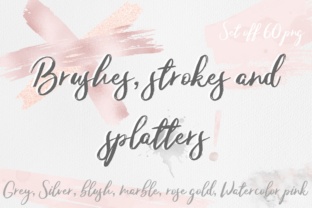
In the evolving landscape of digital design, the demand for authentic, hand-crafted textures has never been higher. Designers, content creators, and hobbyists alike are constantly searching for assets that break the monotony of flat, vector-based graphics. This is where resources like Brushes, Strokes and Splatters come into play. Specifically, collections featuring sets of 60 items in glam colors such as marble, blush, and silver offer a unique intersection between organic artistry and modern aesthetic trends. However, selecting the right texture pack requires more than just glancing at a preview image; it demands an understanding of file formats, color palettes, and how these elements integrate into your specific workflow.
When evaluating a set of beautiful brush strokes and splatters, the primary distinction lies in the versatility provided by the file format. High-quality packs typically deliver all PNG files with transparent backgrounds. This technical specification is not merely a convenience; it is a fundamental requirement for professional layering. Unlike JPEGs, which often carry unwanted white or colored boxes around the artwork, transparent PNGs allow designers to overlay strokes onto photographs, solid colors, or complex patterns without destructive editing. This capability makes them ideal for overlapping on any background, ensuring that the texture enhances rather than obscures the underlying design.
The Aesthetic Spectrum: Soft and Sweet vs. Bold and Glam
One of the most critical decision factors when choosing a texture resource is the mood it conveys. The market generally divides these assets into two distinct categories: the "soft and sweet" approach and the "bold and glam" style. The specific pack under review, characterized by its use of marble, blush, and silver, firmly occupies the former category while touching upon luxury themes. These glam colors are subtle yet sophisticated, offering a refined look that suits wedding invitations, beauty branding, and lifestyle blog headers.
In contrast, alternative packs often feature high-contrast neon splatters, heavy black ink blots, or gritty grunge textures. While those bold options are excellent for music posters, streetwear branding, or edgy social media campaigns, they can overwhelm delicate layouts. If your project requires a touch of elegance without aggressive visual weight, a set focused on soft pastels and metallic sheens is the superior choice. However, if your design brief calls for raw energy and high impact, you may need to explore bolder alternatives outside this specific collection. Understanding this dichotomy helps prevent the common mistake of forcing a texture style that clashes with the overall brand identity.
Practical Applications and Workflow Integration
The utility of a 60-item set extends far beyond simple decoration. For graphic designers working in software like Adobe Photoshop, Illustrator, or Canva, these assets serve as versatile building blocks. Consider the creation of a wedding suite. A blush-colored brush stroke can act as a subtle backdrop for typography, adding depth without reducing readability. Silver splatters can be used to frame monograms, introducing a metallic element that mimics foil stamping in a digital environment. Marble textures provide a luxurious base for business cards or menu designs, conveying a sense of premium quality.
Furthermore, the variety within a 60-item pack ensures consistency across a project. When you use strokes from the same source, the lighting, brush pressure, and pigment density remain uniform. Mixing assets from disparate free sources often results in a disjointed look where one stroke looks like watercolor and another like acrylic paint. By sticking to a cohesive set, you maintain a professional polish. The transparent background feature specifically accelerates the workflow, allowing for rapid experimentation. You can drag and drop elements, adjust opacity, and change blending modes instantly, facilitating a non-destructive design process.
Comparing File Formats and Resource Types
When researching digital art resources, you will encounter various formats including brushes (.abr), vectors (.eps, .svg), and raster images (.png, .jpg). It is essential to understand where pre-rendered PNG strokes fit into this ecosystem. Vector files offer infinite scalability, making them theoretically superior for large-format printing like billboards. However, vectors often lack the nuanced texture of real paint. They can appear too clean and digital, missing the organic imperfections that make hand-painted art appealing.
On the other hand, installable brush files require the user to manually paint the strokes, which offers customization but consumes significant time and requires artistic skill. Pre-made PNG strokes strike a balance. They provide the realistic texture of traditional media with the immediacy of a drag-and-drop asset. While they are resolution-dependent and should not be enlarged beyond their original dimensions without losing quality, most high-resolution PNG packs are sufficient for standard print and web use. For the majority of social media graphics, website headers, and standard print materials, the convenience and realism of PNG strokes often outweigh the scalability benefits of vectors.
Limitations and Decision Factors
Despite their advantages, Brushes, Strokes and Splatters packs are not a universal solution. There are scenarios where they may not be the right fit. If your project requires extensive recoloring, a PNG file can be limiting. While blending modes can alter appearance, changing a deep marble grey to a bright yellow often requires complex masking or may result in unnatural artifacts. In such cases, vector shapes or solid color brushes might be more appropriate. Additionally, if you need thousands of variations, a fixed set of 60 items might feel restrictive compared to a generative brush tool.
Another consideration is the specific color palette. The inclusion of marble, blush, and silver indicates a curated aesthetic. If your brand guidelines strictly mandate corporate blue and orange, these glam tones may require significant manipulation to fit, potentially defeating the purpose of using a pre-made asset. It is always advisable to review the full contents of a pack before purchase to ensure the color range aligns with your long-term needs. Some designers prefer neutral black-and-white strokes that they can colorize themselves, while others value the time-saving aspect of ready-to-use colored textures.
Making an Informed Choice
Ultimately, the decision to utilize a specific set of beautiful brush strokes and splatters depends on the emotional tone you wish to evoke and the efficiency you need in your workflow. For professionals targeting audiences in the wedding, beauty, fashion, or luxury lifestyle sectors, a pack featuring soft, glam colors on transparent backgrounds is an invaluable resource. It bridges the gap between digital precision and human touch.
However, for projects demanding high-contrast grit or total color flexibility, exploring bolder packs or different file formats remains a valid alternative. The key is to view these assets not as magic bullets, but as tools within a broader toolkit. By assessing the tradeoffs between realism and scalability, fixed palettes and customizability, and soft aesthetics versus bold statements, you can select the resources that truly elevate your design work. Whether you stick with this soft and sweet collection or branch out into more aggressive styles, the goal remains the same: to create visuals that resonate authentically with your audience.