Strategic Design Efficiency with 30 Handdrawn Vector Pattern Brushes
In the modern digital landscape, where attention spans are short and visual saturation is high, the distinction between a generic asset and a memorable brand identity often comes down to texture and authenticity. For entrepreneurs, marketers, and creative professionals, the pressure to produce high-quality visual content quickly can sometimes lead to sterile, over-polished results that fail to connect emotionally with an audience. This is where the strategic integration of organic elements becomes critical. The 30 Handdrawn Vector Pattern Brushes collection represents more than just a set of digital tools; it is a resource for injecting human warmth into vector-based workflows without sacrificing the scalability or editability required for professional output.
These brushes were created specifically to help designers and Illustrator fans generate wonderful designs in seconds, but their value extends far beyond speed. They offer a bridge between the tactile feel of traditional ink-on-paper artistry and the precision of digital vector graphics. By understanding how to deploy these assets intentionally, you can elevate your branding, improve communication clarity, and streamline your operational workflow.
The Strategic Value of Organic Texture in Digital Branding
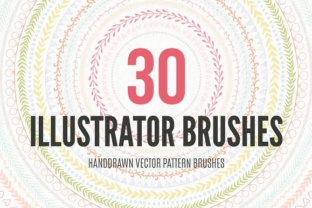
When building a brand or crafting a marketing campaign, consistency is key, but so is character. Many businesses rely heavily on clean, geometric vectors because they are safe and easy to manage. However, this approach can inadvertently strip a brand of its personality. The 30 Handdrawn Vector Pattern Brushes allow you to reintroduce the imperfections that make human communication effective. Because every brush in this pack was hand-drawn with ink on paper, carefully scanned, and converted into vector format, they carry the subtle irregularities of real-world media.
From a positioning standpoint, using these brushes signals to your audience that there is a human behind the screen. For small business owners and educators, this can foster trust and relatability. A handmade border around a key statistic in a presentation, or a sketched underline beneath a headline in a blog post, breaks the monotony of standard typography and guides the reader's eye with intention. This is not merely about aesthetics; it is about cognitive engagement. When viewers perceive effort and artistry, they are more likely to perceive value in the content itself.
Optimizing Workflow and Productivity
Time is a non-renewable resource for freelancers and agency owners. The promise of creating wonderful designs in seconds is not hyperbole if the tools are integrated correctly into your planning phase. The primary advantage of this specific collection is its seamless compatibility with Adobe Illustrator. All 30 brushes can be applied to any stroke, allowing for rapid iteration. Instead of spending hours drawing custom textures or searching for stock elements that don't quite fit, you can apply a brush, adjust the stroke weight, and change the color using standard Illustrator features.
Consider the operational impact: if you are producing a series of social media graphics, a whitepaper, or a product catalog, having a unified library of textures ensures visual cohesion while drastically reducing production time. The fact that these brushes come in a single .ai file simplifies asset management. You do not need to hunt through multiple folders; everything is centralized. This level of organization supports better decision-making during tight deadlines, allowing you to focus on the message rather than the mechanics of creation.
Technical Considerations and Best Practices
To leverage these tools effectively, one must understand their technical constraints and strengths. It is crucial to note that corner segments are not included in this pack. This is a significant detail for planning your design execution. These brushes are optimized for curved paths, circles, or straight lines. If your design strategy relies heavily on sharp, mitered corners, you may need to adapt your layout or combine these brushes with other elements. However, for organic shapes, flowcharts, circular badges, and fluid illustrations, they are ideal.
Installation is straightforward, yet following the correct procedure ensures stability across different versions of the software. To use these brushes:
- Unzip the downloaded file.
- Open Adobe Illustrator (compatible with CS5 and earlier, as well as CS6 and higher).
- Navigate to Window > Brush Libraries > Other Library.
- Locate the .ai file containing the 30 Handdrawn Vector Pattern Brushes.
Once loaded, the workflow is intuitive: draw any shape or stroke, click on the desired brush, and instantly transform a simple line into a textured element. The ability to easily change stroke weight means you can create hierarchy within a single design—using thicker strokes for emphasis and thinner ones for subtle details—all while maintaining the same textural language.
Risks of Random Application vs. Intentional Use
While the ease of use is a major selling point, there is a risk in applying these brushes without a clear strategic goal. Decorative elements should never overshadow the core message. Using hand-drawn textures randomly can result in a cluttered, amateurish appearance that undermines professional credibility. The decision to use a specific brush should be driven by the emotional tone you wish to convey. Are you aiming for a rustic, artisanal feel? Or perhaps a playful, educational vibe?
Without context, these brushes are just lines on a screen. With context, they become part of a narrative. For instance, a financial report might benefit from a subtle, hand-drawn underline to highlight a growth trend, making the data feel more accessible. Conversely, using a heavy, ink-splattered brush for a minimalist luxury brand could create dissonance. Before relying on these tools, ask yourself: Does this texture support the brand voice? Does it enhance readability? Is it consistent with the rest of the visual identity?
Long-Term Results and Scalability
The longevity of your design assets is another factor in your decision-making process. Because these are vector brushes, they are infinitely scalable. Unlike raster images that pixelate when enlarged, these strokes remain crisp whether printed on a business card or a billboard. This scalability ensures that your investment in these tools pays off across various mediums and future campaigns. Furthermore, since the creator provides separated versions for different Illustrator iterations (CS5 and earlier, CS6 and higher), you are protected against compatibility issues that often plague older software environments.
For publishers and content creators, this means you can build a template system that grows with your business. You can establish a "texture library" as part of your brand guidelines, dictating exactly which of the 30 brushes are approved for specific use cases. This standardization prevents brand dilution as your team expands or as you outsource design work.
Making the Decision to Integrate
Ultimately, adopting the 30 Handdrawn Vector Pattern Brushes is a decision to prioritize efficiency without compromising on quality. It is a choice to value the human touch in an increasingly automated world. Whether you are a hobbyist looking to enhance your personal projects or a decision-maker overseeing a large-scale rebrand, the utility of these tools lies in their versatility and ease of implementation.
If you experience any problems with loading the brushes, the creator offers direct support, ensuring that technical hurdles do not stall your progress. This level of accountability is rare in digital marketplaces and adds a layer of security to your purchase. By integrating these brushes thoughtfully, respecting their limitations regarding corners, and aligning them with your broader communication goals, you can achieve designs that are not only beautiful but strategically sound. The result is a body of work that resonates more deeply with audiences, drives better engagement, and stands the test of time in a crowded digital ecosystem.